No Glue Slime Recipe

November 12, 2018

The bowl looked like it held two ordinary ingredients. Then the spoon began to drag, the mixture gathered into one soft lump, and small hands reached in to see what it could do.

This no glue slime recipe turns cornstarch and dish soap into a smooth, squishy sensory material. There is no glue, no borax, and no slime activator to measure. Children can squeeze it, roll it, pull it slowly, and press bubbles into its surface.

It is softer and more dough-like than traditional stretchy slime, which is part of the fun. The texture changes as children warm it in their hands and experiment with the balance of soap and cornstarch.

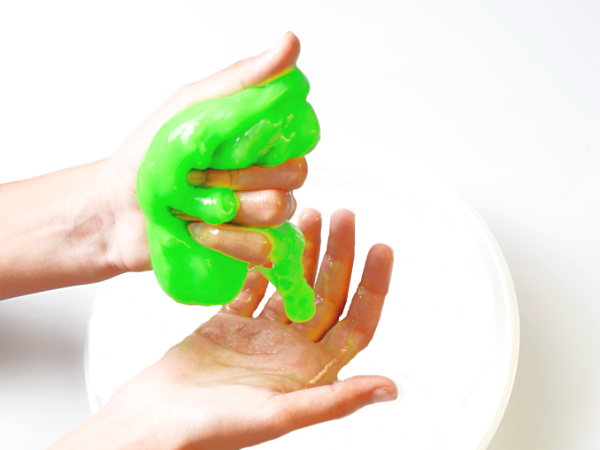
Hands slowly stretching green no glue slime made with dish soap and cornstarch

If your children enjoy testing new textures, our play recipes for kids offer even more ways to mix, mold, and explore.

No Glue Slime Ingredients

  • 1 cup cornstarch
  • Approximately 1/2 cup thick dish soap
  • Food coloring, optional
  • A mixing bowl and spoon
  • A washable tray or play surface

Important: Dish soaps vary in thickness, so treat the amount of soap as a starting point. Add it slowly and let the texture tell you when to stop.

Safety note: This recipe is for play, not eating. Supervise young children, keep the mixture away from eyes and mouths, and wash hands after play. Skip this activity if a child has sensitive skin or reacts to the soap you plan to use.

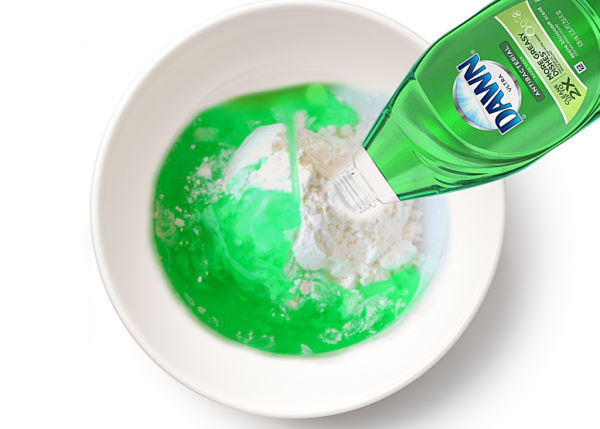
Cornstarch and dish soap ready for a two ingredient no glue slime recipe

How to Make Slime Without Glue

Step 1: Start with the cornstarch

Pour 1 cup of cornstarch into a large bowl. A wide bowl gives children enough room to stir without sending powder over the edge.

Step 2: Add the dish soap slowly

Add a small squeeze of dish soap and stir. Continue adding soap a little at a time, mixing well after every addition. At first the mixture may look dry and crumbly. Soon it will begin to clump together.

Step 3: Knead the mixture

Once the mixture forms a soft mass, lift it from the bowl and knead it with clean, dry hands. Fold, squeeze, and press until the texture becomes smooth.

Hands kneading blue dish soap slime made without glue

Step 4: Adjust the texture

If it sticks to fingers, knead in a spoonful of cornstarch. If it breaks apart or will not hold together, add a few drops of dish soap. Tiny adjustments work better than large pours.

Step 5: Play and explore

Stretch it gently, roll it into a ball, flatten it, or fold air into the mixture and press to make little bubbles. Try dividing one batch and tinting each piece a different color.

What This No Glue Slime Feels Like

This is not the elastic, pourable slime made by combining glue with an activator. Cornstarch and dish soap make a soft, moldable mixture that sits somewhere between slime and play dough. It stretches best when pulled slowly and may snap when tugged quickly.

That difference gives children something useful to notice. What happens when they squeeze quickly? Does the mixture feel softer after warming in their hands? Which adjustment makes it easier to stretch?

For classic elastic recipes, browse our larger collection of slime recipes for kids. This page stays focused on the simple cornstarch-and-dish-soap version.

No Glue Slime Troubleshooting

Why is the slime too sticky?

There is a little too much soap. Sprinkle in cornstarch 1 tablespoon at a time and knead completely before adding more.

Why is it dry or crumbly?

Add dish soap a few drops at a time. Knead after each addition so the moisture spreads through the whole batch.

Why will it not stretch like regular slime?

This recipe contains no glue polymer, so it will not make long, glossy stretches. Pull it slowly for the best stretch, or enjoy it as a soft, moldable sensory dough.

Why did the color change?

Colored dish soap will tint the finished mixture. For more control, begin with clear or white soap and add one drop of food coloring at a time.

How to Store Dish Soap Slime

Place the slime in a sealed container after play and keep it at room temperature. It is best enjoyed the day it is made, though some batches remain playable for a day or two.

Discard it if it becomes dirty, develops an unusual odor, or changes in a way that concerns you. Do not wash a large batch down the drain. Place it in the trash instead.

More Ways to Keep the Mixing Going

Children rarely stop at one experiment. Once they discover that a small spoonful can change the entire texture, they begin making predictions of their own.

For a moldable recipe with a completely different feel, try our homemade floam. When the season turns cozy, the warm scent in our pumpkin slime brings another playful surprise.

For now, there is a bowl on the table, a little cornstarch on every fingertip, and one question children are already asking: What happens if we add just one more drop?